Quick Answer
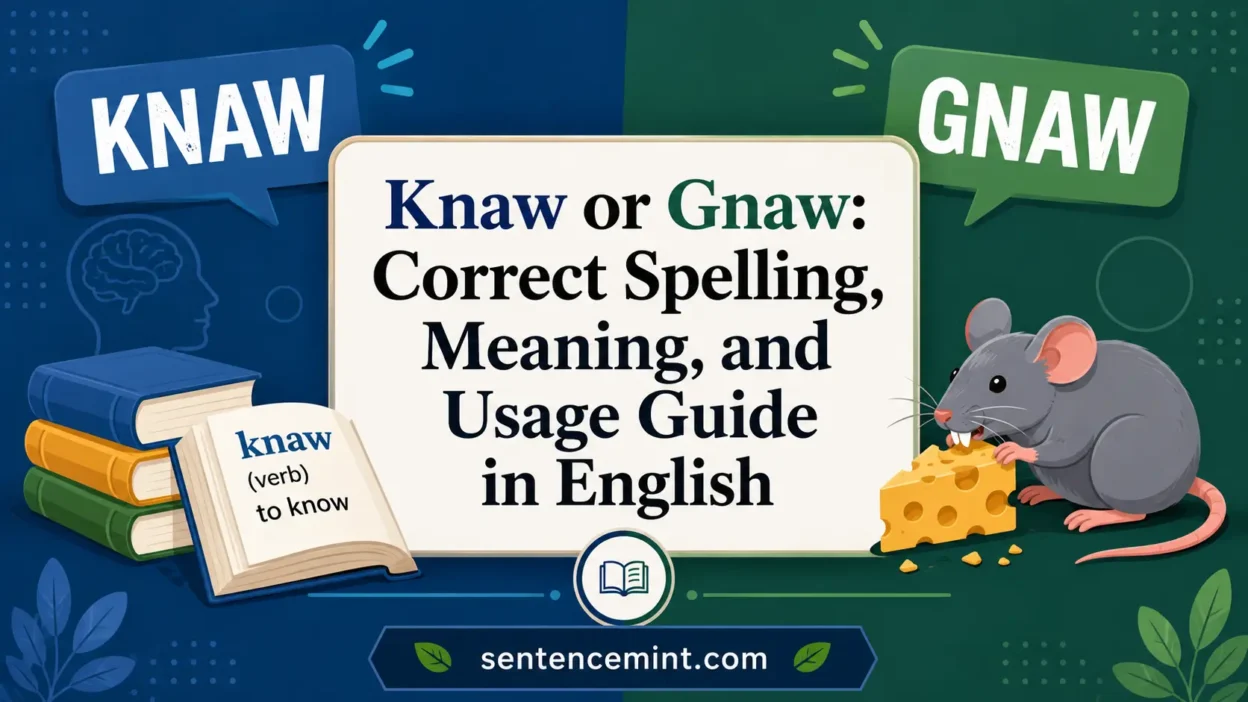
“Gnaw” is the correct and standard modern spelling in English.
“Knaw” is an old or dialect spelling and is not used in modern standard writing.
If you are writing today, always choose gnaw.
Why People Confuse Them
The confusion happens mainly because of pronunciation and historical spelling patterns.
The Silent “G”
In gnaw, the “g” is silent, so the word sounds like:
naw
This makes “knaw” seem logical when written phonetically.
Historical Spellings
Older English and regional dialects sometimes used spellings like knaw, which can still appear in historical texts.
However, modern English standardized the spelling as gnaw.
Key Differences At A Glance
| Context | Best Choice | Why |
|---|---|---|
| Modern US/UK English | gnaw | Standard dictionary spelling |
| Academic writing | gnaw | Required modern form |
| Professional content | gnaw | Correct and accepted |
| Historical texts | knaw | Archaic/dialect usage only |
Are They The Same Word?
Yes.
Both forms refer to the same meaning, but only gnaw is used in modern English.
Meaning of gnaw
- to bite or chew something repeatedly
- to wear away gradually
- to cause emotional discomfort over time
Meaning of knaw
- historical or dialect spelling of the same word
- not used in modern standard English
US Vs UK Preference
Both American and British English use gnaw as the correct modern spelling.
Knaw is not considered standard in either variety today.
Modern dictionaries across English varieties consistently list gnaw as the main form.
Which Spelling Should You Use?
Always use gnaw in:
- school writing
- academic work
- business communication
- blogs and websites
- professional publishing
Avoid knaw unless quoting older literature or representing dialect speech.
When One Spelling Looks Wrong
Using knaw in modern writing often looks like a spelling mistake.
That is because English spelling has standardized over time, and gnaw is now the accepted form.
Common Mistakes (And Quick Fixes)
Incorrect:
“My stomach started to knaw.”
Correct:
“My stomach started to gnaw.”
Incorrect:
Using “knaw” in formal writing.
Correct:
Use “gnaw” consistently in all modern contexts.
Incorrect:
Assuming spelling follows pronunciation.
Correct:
Remember the silent g in “gnaw.”
Everyday Examples
- The dog began to gnaw on the bone.
- Worry started to gnaw at his thoughts.
- Rats can gnaw through wooden doors.
- Guilt continued to gnaw at her conscience.
- The puppy gnawed on the furniture leg.
Dictionary-Style Word Details
Verb
Gnaw
- to bite or chew persistently
- to gradually wear away
- to cause emotional distress over time
Knaw
- historical or dialect spelling of gnaw
- not used in modern standard English
Synonyms
Literal meaning:
- chew
- bite
- nibble
- grind
Figurative meaning:
- trouble
- torment
- erode
- bother
Example Sentences
Gnaw (literal):
The mouse gnawed through the cable overnight.
Gnaw (figurative):
Regret began to gnaw at his mind.
Knaw:
Found only in older texts and dialect writing.
Word History
The word gnaw comes from older Germanic roots and has been part of English for centuries.
Earlier spellings such as knaw appeared in historical or regional writing, but over time English spelling became standardized.
Modern dictionaries and usage patterns now consistently favor gnaw, making it the only acceptable form in contemporary writing.
Phrases Containing Gnaw
- gnaw at
- gnaw away
- gnaw through
- gnaw on
FAQs
Is knaw correct English?
No. Knaw is not used in modern standard English. It is an archaic or dialect spelling of gnaw.
Is gnaw the only correct spelling today?
Yes. In modern English writing, gnaw is the only standard and widely accepted spelling.
Why is gnaw spelled with a g?
The g is silent and comes from older spelling forms. English preserved the spelling even though pronunciation changed over time.
Is gnaw a verb or noun?
Gnaw is primarily a verb meaning to chew or cause gradual emotional distress. It is not commonly used as a noun.
What does gnaw at mean?
“Gnaw at” means to continuously bother or trouble someone emotionally or mentally over time.
Why does knaw look correct but isn’t used?
Because it reflects pronunciation, many assume it should be spelled “knaw.” However, English standardized the spelling as gnaw, making “knaw” outdated.
FAQs
Is knaw correct English?
No. “Knaw” is not correct in modern English. It is an archaic or dialect spelling that appears only in older texts. The standard modern spelling is “gnaw.”
Is gnaw the correct spelling?
Yes. “Gnaw” is the correct and standard spelling used in both American and British English today.
Why is gnaw spelled with a silent g?
The “g” in “gnaw” is silent due to historical sound changes in English. The spelling was preserved even after pronunciation simplified to “naw.”
What does gnaw mean?
Gnaw means to bite or chew something repeatedly, or to gradually cause emotional discomfort or worry over time.
Example:
- The problem began to gnaw at his mind.
Is gnaw a verb or noun?
Gnaw is mainly a verb. It is used for both literal chewing and figurative emotional distress. It is not commonly used as a noun in modern English.
Are gnaw and knaw the same word?
Yes, they come from the same historical word. However, “gnaw” is the modern standardized spelling, while **“knaw” is outdated and not used in current writing.
Where is knaw used today?
Today, “knaw” is rarely used except in historical writing, old texts, or certain dialect representations. It is not part of standard modern English.
Is gnaw formal or informal?
Gnaw is neutral and can be used in both formal and informal writing, including academic, professional, and everyday contexts.
How do you pronounce gnaw?
It is pronounced as “naw” (the “g” is silent).
What is the difference between gnaw and chew?
Gnaw usually implies persistent or forceful biting or ongoing emotional impact, while chew is more general and neutral.
Example:
- The dog gnawed the bone for hours.
- The child chewed gum slowly.
Can I use knaw instead of gnaw?
No. In modern writing, using “knaw” will be considered incorrect or outdated. Always use “gnaw.”
Conclusion
The correct modern spelling is gnaw, used in both American and British English.
Knaw is an archaic or dialect variant and should not be used in modern writing.
If you want correct, professional, and standard English usage, always choose:
gnaw