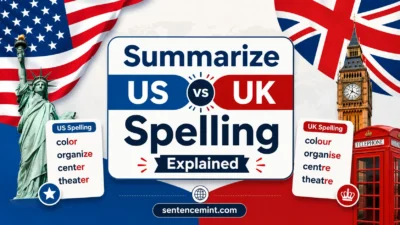
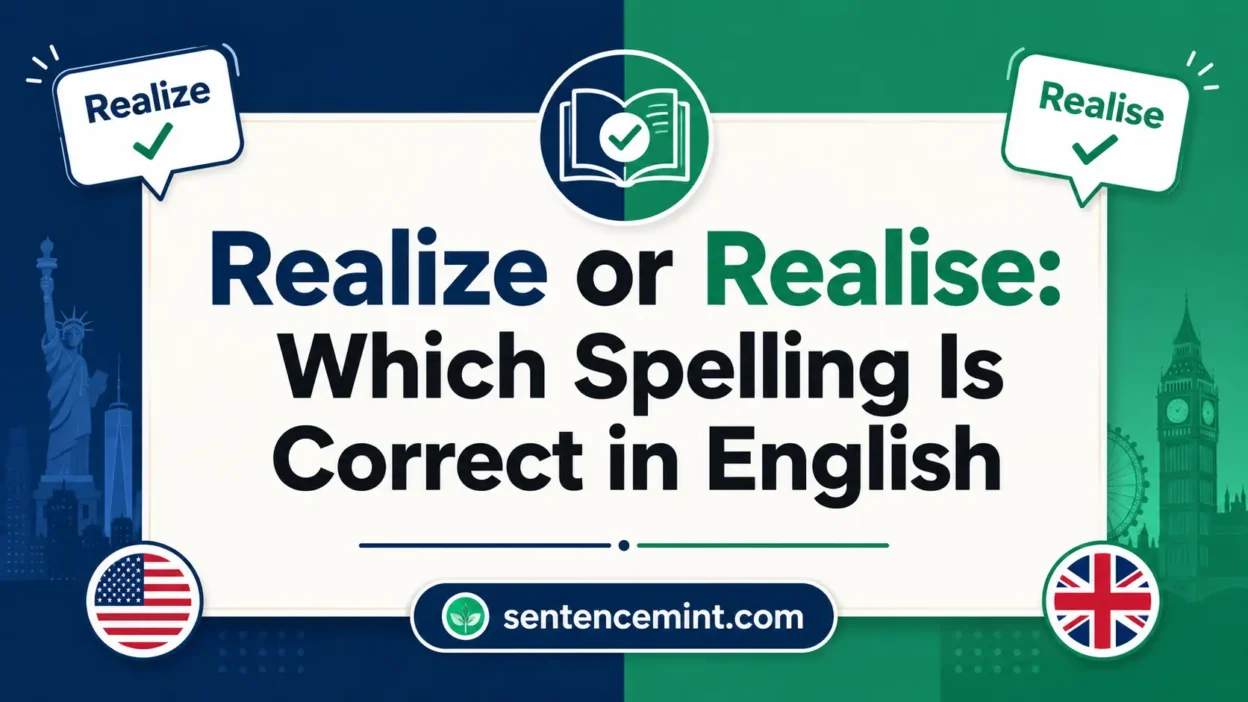
“Realize” and “realise” are two spellings that often confuse English learners.
The important thing to know is simple:
Both are correct, but they belong to different English spelling systems.
The meaning never changes—only the spelling depends on whether you are using American or British English.
Quick Answer
- Realize = standard American English
- Realise = standard British English
Both mean:
- to become aware of something
- to understand something clearly
- to make something real or happen
Why People Confuse Them
English has two major spelling systems:
- American English
- British English
Many verbs ending in “-ize” or “-ise” follow this split.
So learners often see both versions and assume one is incorrect—but both are valid depending on region.
Key Differences At A Glance
| Context | Best Choice | Why |
|---|---|---|
| US English writing | realize | Standard American spelling |
| UK English writing | realise | Standard British spelling |
| Academic writing (US style guides) | realize | Preferred by US publishers |
| British publications | realise | UK standard usage |
| Global content | either (be consistent) | Both are accepted |
Are They The Same Word?
Yes.
“Realize” and “realise” are the same word with the same meaning.
The only difference is spelling convention.
Meaning examples:
- becoming aware of something
- understanding a situation
- making something happen or true
The meaning does NOT change between spellings.
US Vs UK Preference
American English uses:
- realize
British English uses:
- realise
This difference comes from spelling standardization:
- US English preferred simplified -ize endings
- UK English preferred -ise endings
Both forms are widely accepted in their own systems.
Which Spelling Should You Use?
Use this simple rule:
- Writing for US audience → realize
- Writing for UK audience → realise
- Writing globally → pick one and stay consistent
The most important rule:
👉 Do NOT mix both spellings in the same document.
That is what looks incorrect in professional writing.
When One Spelling Looks Wrong
Neither spelling is wrong by itself.
It only looks wrong when you mix systems.
Example of inconsistency:
❌ I realize I should have realised it earlier.
Correct US version:
✔ I realize I should have realized it earlier.
Correct UK version:
✔ I realise I should have realised it earlier.
Common Mistakes (And Quick Fixes)
❌ Switching between US and UK spelling
✔ Pick one system and stay consistent
- ❌ Thinking one form is more correct
- ✔ Both are correct in their own systems
- ❌ Assuming spelling changes meaning
- ✔ Meaning stays exactly the same
Everyday Examples
US English:
- I didn’t realize how late it was.
- They realize the importance of practice.
- She finally realized the truth.
UK English:
- I didn’t realise how late it was.
- They realise the importance of practice.
- She finally realised the truth.
Business/academic style:
- The company realized significant growth this year.
- Researchers realised the experiment required adjustment.
Dictionary-Style Word Details
Verb
realize (US)
realise (UK)
Meaning:
- to become aware of something
- to understand clearly
- to make something real or happen
Synonyms
- understand
- notice
- recognize / recognise
- become aware of
- comprehend
Example Sentences
- I finally realized what happened.
- She realised the mistake immediately.
- They didn’t realize the impact of the decision.
- He realised the importance of timing.
Word History
Both spellings come from the same Latin root and entered English through French influence.
Over time:
- American English standardized -ize
- British English standardized -ise
This created two accepted spelling systems for the same word, without changing meaning or grammar.
Phrases Containing
- realize/realise a dream
- realize/realise the truth
- come to realize/realise
- suddenly realize/realise
- fully realize/realise
(FAQ)
Is realize or realise correct?
Both are correct. “Realize” is American English, while “realise” is British English. The meaning is exactly the same.
Is realise wrong in American English?
No, it is not “wrong,” but it is not the standard American spelling. In US writing, “realize” is preferred and expected.
Why do Americans write realize instead of realise?
American English adopted a simplified spelling system that favors “-ize” endings for many verbs. British English kept the “-ise” form.
Do realize and realise mean the same thing?
Yes. Both words mean:
- to become aware of something
- to understand something clearly
- to make something happen or become real
Which spelling should I use in writing?
Use:
- realize → American English
- realise → British English
For general/global writing, pick one and stay consistent.
Can I mix realize and realise in the same article?
No. Mixing them in the same document looks inconsistent and is considered a writing mistake in professional English.
Is realize more formal than realise?
No. Both are equally formal. The difference is only regional spelling preference, not tone or formality.
Why are there two spellings for the same word?
English developed differently in the US and UK. Over time, each region standardized its own spelling rules.
How do you pronounce realize vs realise?
There is no pronunciation difference. Both are pronounced the same: REE-uh-lyze.
Is realize British or American English?
“Realize” is American English, while “realise” is British English and used in many Commonwealth countries.
Conclusion
“Realize” and “realise” are not different words—they are two spelling systems for the same meaning.
- Use realize for American English
- Use realise for British English
The most important rule is consistency. Once you choose a spelling system, stick with it throughout your writing.