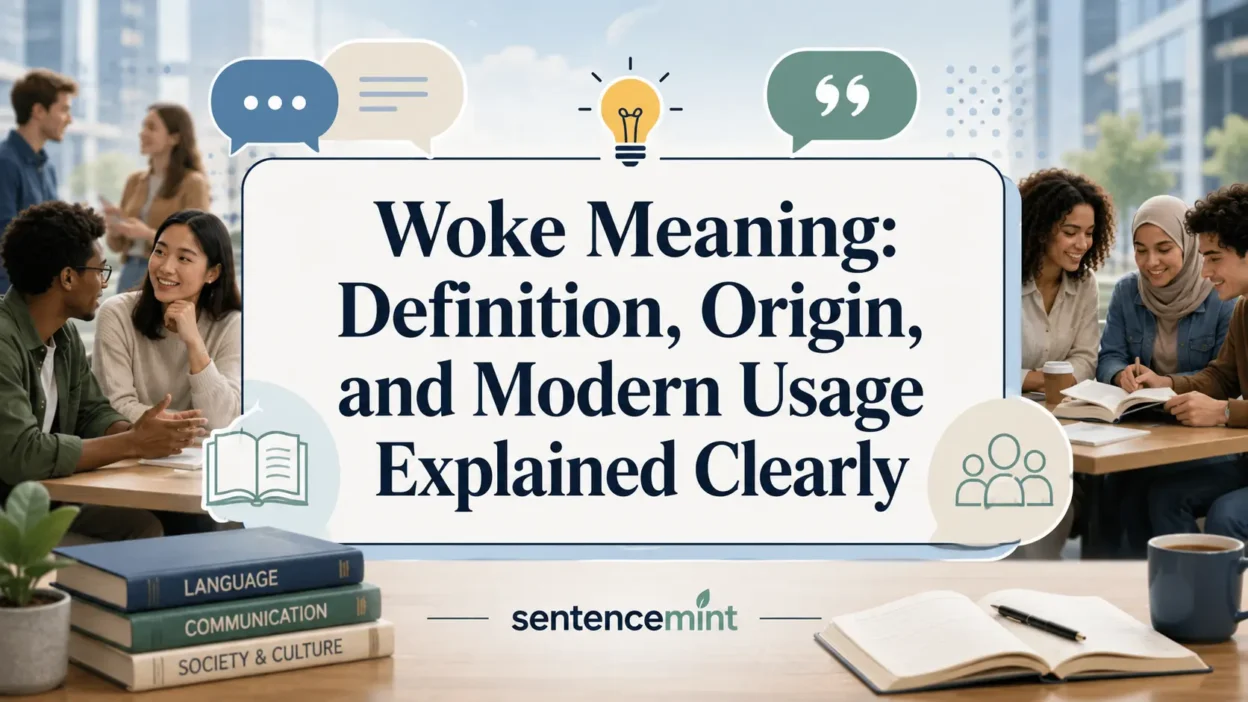
The word “woke” is widely used in modern English, especially in social media, news, and cultural discussions. You may see it used in conversations about fairness, awareness, politics, or social justice. Because it appears in many different contexts, its meaning can sometimes feel confusing or even controversial.
Originally, “woke” simply meant being awake or alert. Over time, it developed a deeper cultural meaning connected to awareness of social issues and inequality. In recent years, it has also taken on political and sometimes sarcastic tones depending on who is using it.
This guide explains the full meaning of “woke,” its origin, modern usage, tone differences, and how to use it correctly in real life.
Quick Answer: What Does Woke Mean?
“Woke” means being aware of social issues such as inequality, discrimination, and justice. It is commonly used in informal English and can describe someone who pays attention to fairness in society. Depending on context, it can sound positive, neutral, or even critical.
What Does Woke Mean in Simple English?
In simple terms, “woke” describes a person who notices and understands social problems in society. These problems may include unfair treatment, inequality, or discrimination.
It is often used to describe someone who is socially aware and thinks critically about justice-related issues.
Example:
- She stays woke about environmental and social issues in her community.
Origin of the Word “Woke”
The word “woke” comes from African American Vernacular English (AAVE), a linguistic variety of English used in African American communities. Originally, it meant being “awake” or “alert,” especially to injustice or unfair treatment.
Over time, the meaning expanded beyond literal alertness to include social awareness. It gained wider popularity in the 2010s through social media, activism, and news discussions.
Today, it is used globally, but its meaning can shift depending on cultural and political context.
Modern Meaning of Woke
In modern usage, “woke” generally refers to awareness of social and political issues. However, its meaning is not fixed and often depends on tone and context.
Common modern meanings include:
- Socially aware of inequality and injustice
- Engaged in discussions about fairness and identity
- Politically aware (sometimes critical usage)
- Sarcastic label for overly political correctness (in some contexts)
Because of these variations, “woke” can be both supportive and critical depending on how it is used.
Positive, Neutral, and Negative Usage
The meaning of “woke” changes based on tone and intention.
| Tone | Meaning | Example |
|---|---|---|
| Positive | Socially aware and informed | “She is woke about climate issues.” |
| Neutral | Descriptive use | “The group became more woke over time.” |
| Negative | Sarcastic or critical | “That sounds too woke for some audiences.” |
This flexibility is one reason the word is widely debated.
Woke in Social and Cultural Contexts
“Woke” is often used in discussions about society, politics, media, and culture. It appears in debates about fairness, representation, equality, and identity.
In social media, it is sometimes used seriously to describe awareness. In other cases, it is used as a label or criticism in political arguments.
Because of this dual usage, understanding context is essential when interpreting the word.
Woke in Internet and Media Language
On social platforms like TikTok, Twitter (X), and Instagram, “woke” is frequently used in memes, commentary, and debates. It can be:
- A compliment for being socially aware
- A criticism of political correctness
- A humorous or ironic label
This online flexibility has made the word more complex than its original meaning.
How to Use “Woke” in Sentences
Here are natural examples of how “woke” is used in modern English:
- “He became woke after learning about social inequality.”
- “They are woke about environmental issues.”
- “That comment sounds sarcastically woke.”
In most cases, it is used informally and works best in conversational or media contexts.
When Not to Use “Woke”
Avoid using “woke” in:
- Formal academic writing
- Professional business communication
- Situations where meaning may be misunderstood
- Sensitive or unclear audiences
In formal contexts, clearer alternatives like “socially aware” or “culturally conscious” are better.
Common Mistakes with Woke
1. Using “woke” as a noun
- Incorrect: He is a woke
- Correct: He is woke
2. Using it without context
- Weak: She is woke
- Better: She is woke about social justice issues
3. Overusing it in formal writing
It is informal slang and should be used carefully.
Similar Words to Woke
- Aware – general understanding of something
- Conscious – formal awareness
- Alert – attention-focused meaning
- Socially aware – closest formal equivalent
These alternatives are more neutral and professional.
Why “Woke” Is Sometimes Controversial
The word “woke” has become controversial because it is used differently by different groups. Some see it as a positive term for awareness and justice. Others use it as a critical label for political or cultural movements.
This difference in interpretation is why the word often appears in debates, news commentary, and online discussions.
Frequently Asked Questions
What does woke mean in simple terms?
It means being aware of social issues like inequality, fairness, and justice in society.
Is woke positive or negative?
It depends on context. It can be positive, neutral, or negative depending on tone.
Where did the word woke come from?
It originated from African American Vernacular English and originally meant being alert to injustice.
Is woke slang or formal English?
It is informal slang and is not typically used in formal or academic writing.
How is woke used in a sentence?
Example: “She is woke about environmental issues and social fairness.”
What is woke culture?
It refers to social awareness around issues like equality, identity, and justice.
FAQs
What does woke mean in simple English?
It means being aware of social issues such as fairness, inequality, and justice in society.
Is woke a positive or negative word?
It can be positive, neutral, or negative depending on the context and tone used by the speaker.
Where did the word woke come from?
It comes from African American Vernacular English (AAVE), where it originally meant being alert to injustice.
Is woke slang or formal English?
It is informal slang and is mostly used in casual conversation, media, and online discussions.
How is woke used in modern conversations?
It is used to describe someone aware of social and political issues, or sometimes sarcastically in debates.
What is woke culture?
It refers to social awareness around topics like equality, identity, fairness, and justice in society.
Conclusion
The meaning of “woke” has evolved from simple alertness to a complex cultural and social concept. Today, it describes awareness of social issues, but its tone can change depending on context, ranging from positive recognition to political criticism.
Understanding how “woke” is used helps you better interpret modern conversations in media, online platforms, and everyday English.