Many writers mix up its vs it’s, even in everyday emails and messages. The confusion usually comes from one small mark—the apostrophe.
Here’s the problem: one form shows ownership, and the other is a shortened phrase. Using the wrong one can make a sentence look careless or unclear.
This guide will make the difference simple and easy to remember.
2. Quick Answer
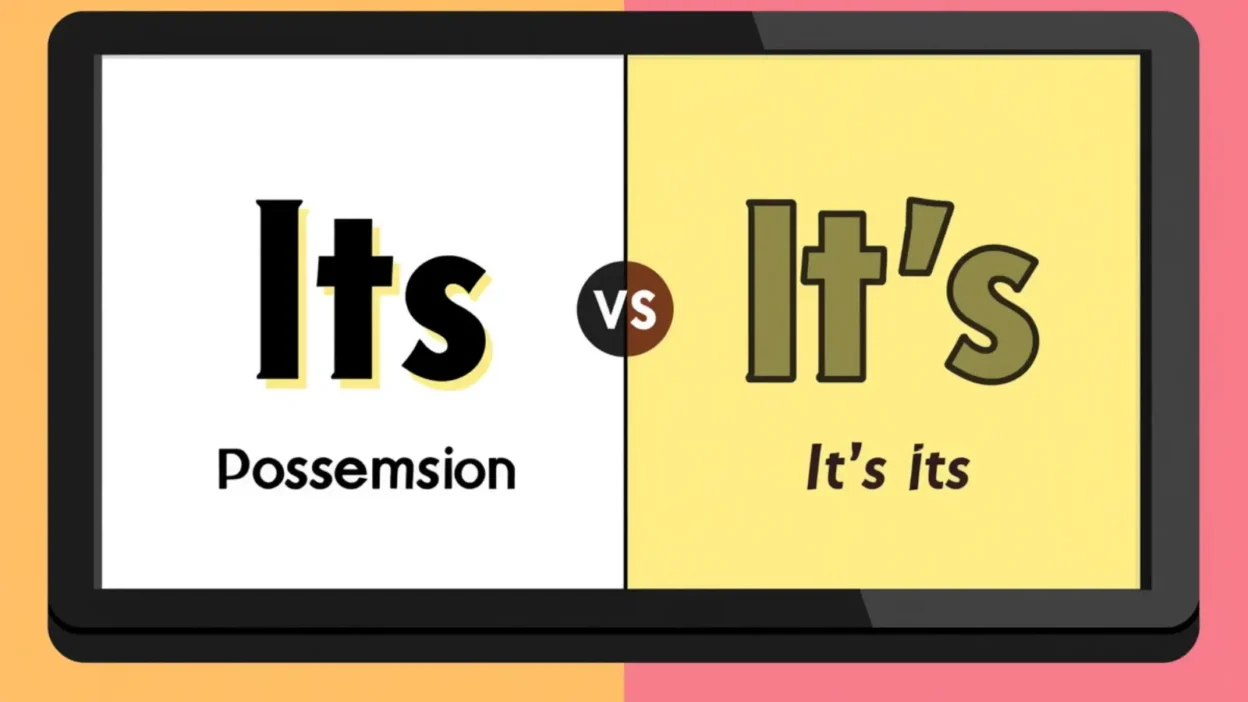
- its = shows possession (something belongs to “it”)
- it’s = short for “it is” or “it has”
Quick test:
- If you can replace the word with “it is” or “it has,” use it’s
- If not, use its
Examples:
- The company changed its policy. ✅
- It’s going to rain today. ✅
They are not interchangeable.
3. Why People Confuse Them
There are a few clear reasons:
- They sound exactly the same (homophones)
- Apostrophes usually show possession—but not here
- Autocorrect often inserts the wrong form
Common mistake:
- The dog wagged it’s tail ❌
(Correct: its tail)
The rule is consistent—it just goes against what many expect about apostrophes.
4. Key Differences At A Glance
| Context | Best Choice | Why |
|---|---|---|
| Showing ownership | its | Possessive pronoun (no apostrophe) |
| Saying “it is” | it’s | Contraction |
| Saying “it has” | it’s | Contraction |
| Before a noun | its | Indicates something belongs to “it” |
| Verb phrase needed | it’s | Expands to “it is/has” |
5. Meaning and Usage Difference
The difference comes down to grammar.
- its is a possessive pronoun
- it’s is a contraction
Think of it like this:
- The robot lost its power.
→ “Power” belongs to the robot - It’s losing power.
→ “It is losing power”
Another example:
- The tree dropped its leaves.
- It’s dropping leaves early this year.
If the sentence needs a verb (“is” or “has”), use it’s.
If it shows ownership, use its.
6. Tone, Context, and Formality
Both forms are neutral, but there’s a small difference in style:
- its appears in all types of writing
- it’s is common in casual writing
In more formal writing, people may avoid contractions:
- Informal: It’s clear this works.
- Formal: It is clear this works.
Still, both are correct when used properly.
7. Which One Should You Use?
Use this quick decision method:
- Try replacing the word with “it is” or “it has”
- If it works → use it’s
- If it doesn’t → use its
Examples:
- ___ a great idea → It’s a great idea
- The car lost ___ tire → The car lost its tire
This method works almost every time.
8. When One Choice Sounds Wrong
Sometimes, the wrong option clearly breaks the sentence.
- The company updated it’s website ❌
→ “it is website” doesn’t make sense
→ Correct: its website - Its raining outside ❌
→ Missing verb
→ Correct: It’s raining
Reading the sentence out loud helps you catch these errors quickly.
9. Common Mistakes (and Quick Fixes)
- Mistake 1: Using “it’s” for possession
- The cat cleaned it’s paws ❌
- Fix: The cat cleaned its paws ✅
- Mistake 2: Writing “its’”
- The company changed its’ policy ❌
- Fix: The company changed its policy ✅
- Mistake 3: Overusing apostrophes
- Every possessive needs one ❌
- Fix: Possessive pronouns (its, his, her, their) do not use apostrophes ✅
10. Everyday Examples
- The phone lost its signal.
- It’s getting late.
- The dog wagged its tail.
- It’s been a long day.
- The app updated its features.
- It’s working perfectly now.
- The company improved its service.
- It’s time to leave.
These are the kinds of sentences you’ll see every day.
If apostrophe mistakes feel confusing, you might also want to learn the difference between Your vs You’re — another commonly mixed-up pair that causes writing errors similar to its and it’s.
11. Dictionary-Style Word Details
Verb
- its: Not applicable (no verb function)
- it’s: Contains a verb through contraction (“is” or “has”)
Noun
- its: Not a noun
- it’s: Not a noun
Synonyms
- its: “belonging to it” (closest plain alternative)
- it’s: “it is” / “it has” (exact expansion)
Example Sentences
- its: The company updated its logo.
- it’s: It’s been updated recently.
Word History
- its: Developed as a possessive pronoun without an apostrophe
- it’s: Formed as a contraction of “it is” or “it has”
Phrases Containing
- its: “in its place,” “its purpose,” “its role”
- it’s: “it’s time,” “it’s been,” “it’s likely”
If commonly confused English words trip you up, you may also want to explore There, Their, and They’re: What’s the Difference? to avoid another one of the most frequent writing mistakes.
12. Conclusion
The rule for its vs it’s is simple once you see it clearly:
its shows possession, and it’s means “it is” or “it has.”
- When in doubt, use the substitution test—it’s fast and reliable.
Get this right, and your writing will instantly look sharper and more polished.